Why spending hurts more with cash than with cards
Paying activates the same brain region as physical pain. Anything that mutes that signal. Cards, taps, one-clicks. Makes you spend more. The fMRI evidence is clear.
CostMe Research Desk · May 26, 2026
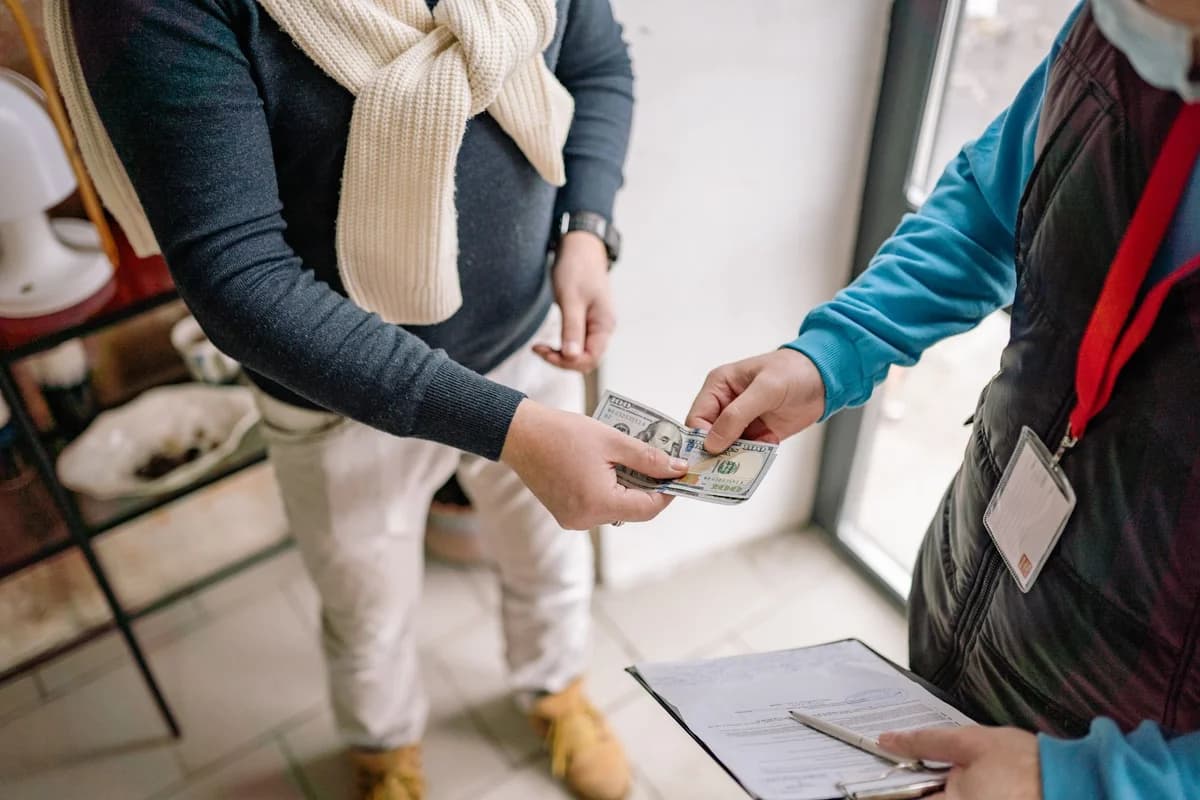
Hand someone six twenty-dollar bills and ask them to buy a $120 sweater. Now ask the same person to tap a card for the same sweater. Same money. Same sweater. Different feeling.
Almost everyone reports the cash transaction as more painful. And that's not a metaphor. fMRI work by Knutson and colleagues showed the insula, the brain region that processes physical pain, lights up when we contemplate paying (Knutson et al., 2007).1 The pain of paying is literally measured in the same circuitry as a stubbed toe.
The framework behind it
The phrase “pain of paying” was popularized in a 1998 Marketing Science paper titled The Red and the Black.2 Its core argument: the pleasure you get from consumption is reduced — and sometimes overwhelmed — by the displeasure of having to pay for it.
Pain of paying is real pain, in the same brain region.
Two consumption modes change everything about how that pain registers:
- Coupling. When you pay at the same moment you consume. Cash for a sandwich, for example. The pain and the pleasure are tightly bundled. You feel both. The pain dampens the pleasure.
- Decoupling. When payment is separated from consumption. A card you pay off later, a hotel charged to your room, an Uber that auto-deducts. The pleasure is felt now and the pain is felt (weakly) later, or not at all.
Decoupling is exactly what the modern payments stack is engineered to maximize. One-click checkout. Saved cards. Apple Pay tap-and-go. Subscriptions that auto-renew invisibly. Every one of these is a feature from the merchant's perspective and a tax on the consumer's decision-making from yours.
The Prelec and Simester auction
How big is the effect? In a clever 2001 experiment, Prelec and Duncan Simester ran sealed-bid auctions for Boston Celtics and Red Sox tickets among MBA students (Prelec & Simester, 2001).3 Half were told they had to pay cash. Half were told they had to pay by credit card.
Credit card bidders bid roughly twice as much as cash bidders for the same tickets. The willingness to pay was, on average, ~100% higher when the payment method was a card.
That is not a 10% nudge. It is not even a 30% nudge. The payment method, holding the item and the bidder and the context constant, can roughly double what someone is willing to spend.
The Knutson fMRI study
The neuroscience came in 2007. Brian Knutson's group at Stanford ran subjects through an fMRI while they made buy-or-skip decisions about products at various price points (Knutson et al., 2007).1 They identified three reliable patterns:
- When subjects liked the product, the nucleus accumbens — the brain's reward region — lit up.
- When the price felt excessive, the insula — the pain-processing region — lit up.
- The buy decision could be predicted, well above chance, from the relative activation of those two regions before the subject reported a choice.
In plain English: your brain is running a real-time pleasure-versus-pain calculation, and the outcome of that calculation is the purchase decision. Anything that mutes the insula signal — any payment method that reduces the perceived pain — tilts the calculation toward buying.
What “mutes the signal” in practice
Cards vs cash
The single largest factor. Cash forces you to physically hand over the money. The loss is concrete, immediate, visible. Cards abstract it. The body doesn't feel the same loss when the act is “tap a piece of plastic on a sensor.”
One-click and saved payment methods
Amazon's 1-Click patent was a billion-dollar idea precisely because it removed almost all the friction that produces the pain signal. The fewer steps between wanting and paying, the less the insula is engaged.
Buy-now-pay-later
BNPL services like Klarna and Afterpay are the most aggressive decoupling instrument ever shipped to consumers. Consumption is now; the four payments are in the abstract future; no interest is charged so even the cognitive label of “debt” is suppressed. Predictably, basket sizes on BNPL run far higher than on conventional payment methods.
Subscriptions and auto-renewals
Pure decoupling. You consume continuously, you pay invisibly. The pain signal essentially never fires because there's no moment of decision attached to any individual payment.
The countermeasure: re-couple the pain
You can't go back to using only cash. The point of a healthy approach isn't maximum pain. It's accurate pain. The signal exists to inform a decision; when the signal is missing, decisions get worse.
The interventions that work all amount to re-introducing a moment of friction at the point of purchase:
- Remove saved payment methods from any site you find yourself impulse-buying on. Make yourself type the card number each time.
- Use a 48-hour rule for any non-essential purchase above a threshold you set. The cooldown reintroduces the deliberation that the tap removed.
- Cancel BNPL. The tax is real even when no interest is charged.
- Use a tool that explicitly shows you the long-term cost of a purchase at the moment of decision. The pain signal needs information; the calculation provides it.
How CostMe applies this research
CostMe is, structurally, an attempt to re-couple the pain signal that modern payment systems have decoupled. The Knutson study suggests that purchase decisions are the output of a pleasure-versus-pain calculation. When the “pain” side of that calculation is starved of information, the system makes more purchase decisions than it would with full data.
The calculator restores the missing information. Type in $50 and the app shows what $50 would compound to at the S&P 500's 30-year average. Typically somewhere between $400 and $900 depending on the horizon you set. The insula doesn't need to feel $50 of pain anymore. It needs to feel $500.
The Vault button works on the same mechanism but in reverse: it converts the absence of a purchase into a tangible, visible gain. The reward circuitry, deprived of the consumption hit, gets a substitute. The count goes up.
The 48hrs cooldown re-couples by delaying the consumption. The pleasure of the imagined purchase is paid for, in real time, by 48 hours of not-having. That re-introduces the pain side of the ledger even when the actual payment is still abstract.
Finally, the Amy coach is built to engage during the highest-decoupling moments. Late-night scrolling, repeated lookups of the same item, sessions on tap-to-pay-heavy apps. These are exactly the contexts where the pain signal is most suppressed, and therefore where a deliberate question is most useful.
The point isn't to make spending miserable. It's to give your brain back the information that the payment industry has spent twenty years engineering away.
References
- Knutson, B., Rick, S., Wimmer, G. E., Prelec, D., & Loewenstein, G. (2007). Neural predictors of purchases. Neuron, 53(1), 147-156. https://doi.org/10.1016/j.neuron.2006.11.010
- Prelec, D., & Loewenstein, G. (1998). The red and the black: Mental accounting of savings and debt. Marketing Science, 17(1), 4-28. https://doi.org/10.1287/mksc.17.1.4
- Prelec, D., & Simester, D. (2001). Always leave home without it: A further investigation of the credit-card effect on willingness to pay. Marketing Letters, 12(1), 5-12. https://doi.org/10.1023/A:1008196717017
Related reading: why your brain says yes to the impulse buy and why the source of a dollar changes how you spend it. Back to costme.io.
How this helps you in CostMe
CostMe brings back the helpful sting by showing the price as lost future money before you tap pay, so an easy card swipe doesn't feel free.
Start free